

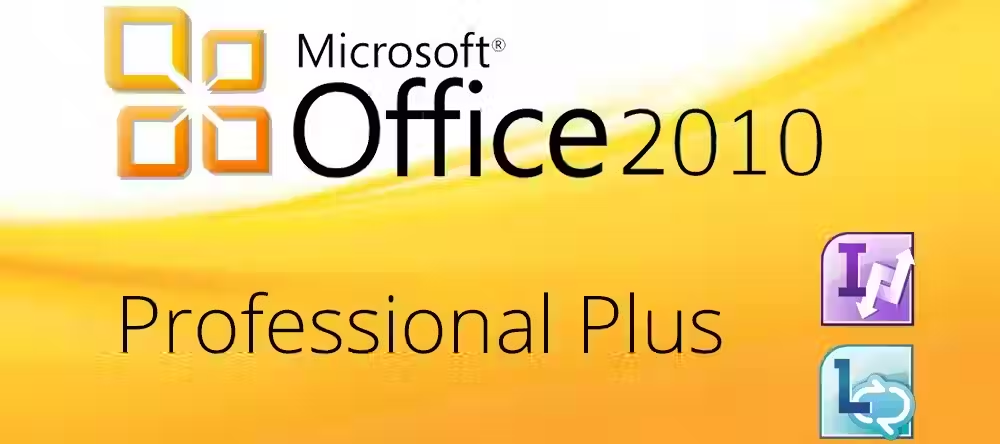
What is Office 2010 Professional Plus
- It’s a perpetual‑license version of Microsoft Office (you buy once, own indefinitely).
- “Professional Plus” is one of the more complete editions, intended for business/enterprise/volume licensing. It includes more apps/features than standard editions.
Key Features / What It Includes
Some of the components typically included in Office 2010 Professional Plus:
- Word 2010 (for documents)
- Excel 2010 (spreadsheets)
- PowerPoint 2010 (presentations)
- Outlook 2010 (email, calendar, contacts)
- Publisher 2010 (desktop publishing)
- Access 2010 (database)
- OneNote 2010
- Possibly InfoPath, Lync (depending on licensing or enterprise‑features)
Newer features (for its time) included:
- Improved UI (“Ribbon” interface more refined).
- Better collaboration & sharing tools (especially for enterprises).
- More advanced data processing (in Excel), smoother graphics in PowerPoint.
- Compatibility with Windows versions of that era.
System Requirements (approximate / minimum)
From Microsoft’s published requirements:
- OS: Windows Vista SP1, Windows 7, or server versions of Windows from that era.
- CPU: ~1 GHz or higher. Dual‑core helps. MCP Magazine Online
- RAM: Minimum ~1‑2 GB for 32‑bit; more (2‑4 GB or more) for 64‑bit.
- Graphics: A graphics processor that supports DirectX 9.0c with at least 64 MB video RAM, for some graphics features, hardware acceleration in PowerPoint etc.
- Disk space: Several GB free for installation + working space.
Support & End‑of‑Life Status
- Mainstream support ended on October 13, 2015. Microsoft Learn
- Extended support (security updates, bug fixes for vulnerabilities, etc.) ended on October 13, 2020. After that date, Microsoft no longer provides security updates or technical support. Microsoft Support+2Microsoft Learn+2
- Post‑October 2020, Office 2010 may still run on compatible machines, but:
No new security patches → more risk of vulnerability. Microsoft Support+1
No technical support from Microsoft. Microsoft Support+1
Compatibility over time with newer Windows versions or with new file formats / cloud services may degrade.
Advantages (for its users, especially back in its prime)
- One‑time purchase; no recurring subscription fees.
- Good set of tools — especially for business / professional use.
- Offline usability: once installed, doesn’t require cloud infrastructure to work.
- Familiar interface for users of older Office versions.
Disadvantages / Risks Now
- Security risk: Without updates, any newly discovered vulnerabilities remain unpatched. If you open files from the Internet or use Outlook/attachments, you’re more exposed.
- No feature updates: Features are frozen; no new improvements, limited bug fixes (only prior to end‑of‑support).
- Compatibility issues: With newer versions of Windows, with other software, with file formats, cloud services, etc. Over time, some integrations may break or not be supported.
- Lack of support: If something breaks, no official help from Microsoft.
- Legal/licensing concerns: If bought from unofficial sources, activation or license legitimacy might be in question.
What to Consider If You’re Still Using It
If you are using (or considering using) Office 2010 Professional Plus today, here are points to keep in mind:
Security: Be very cautious. Limit exposure (don’t open suspicious attachments, use antivirus, keep the OS updated).
Backup: Since no support, ensure your important documents are backed up.
Compatibility: Test with any required newer formats or shared documents. Some newer .docx / .xlsx / .pptx files might work, but advanced newer features may not.
Alternatives: Evaluate upgrading to a more modern version of Office (2019, 2021, or Microsoft 365) if possible. Even free/open source alternatives (LibreOffice, Google Docs) may serve many needs.
Licensing: If you already have a legitimate license, you may still install & use, but if you’re buying now, ensure the license is genuine and check whether activation still works.