


Do you want:
- an overview / features of VMware Workstation Pro 17
- system requirements / how to install
- licensing / cost / how it’s changed
- help with a specific issue
I’ll start with a general summary; tell me what you want more detail on.
Overview & new features
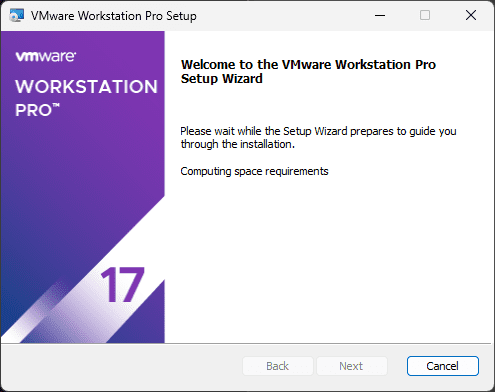
VMware announced Workstation Pro 17 (and Player) in late 2022. VMware Blogs
Key enhancements in version 17 include:
• Support for Windows 11 hosts and guests, including a virtual TPM device (vTPM) VMware Blogs
• “Fast Encryption” as a performance‑oriented encryption mode for VMs with vTPM VMware Blogs+1
• Auto‑start VMs at host boot – you can configure VMs to start automatically when your PC boots. VMware Blogs
• Improved graphics support (OpenGL 4.3) for guest OSes in both Linux and Windows environments. VMware BlogsLater in the 17.x series, enhancements such as stronger VM encryption schemes, more guest OS support, API automation for vTPM VMs, and bug fixes were added (in e.g. 17.5) VMware Blogs
Licensing / cost / how the pricing changed
This is an important part, because VMware changed how licensing works recently.
Starting May 2024, VMware made Workstation Pro (and Fusion Pro) free for personal use. VMware Blogs+2gHacks Technology News+2
If you’re using it for commercial or business purposes, a paid subscription is required. VMware Blogs
However, in November 2024, they extended the free model to everyone (personal, educational, commercial) for Workstation & Fusion. TechSpot+2TechSpot+2
From version 17.6.3 onward, a license key is no longer required. TechSpot+1
This also means that the core features are no longer gated by license type. TechSpot+1
Because of this, the older “Player” edition (a lighter, limited edition) has been discontinued, since the Pro edition covers both roles. VMware Blogs+1
That said, some users have reported issues: for instance, after installing 17.6, they are prompted for a license or see a “license expires in 30 days” message, rather than being able to simply use it in “personal use” mode. Reddit
System Requirements & Host / Guest OS support
Host requirements
64‑bit Intel or AMD (x86‑64) processor (released ~2011 or later) youwindowsworld.com
At least 2 GB RAM (4 GB+ recommended) youwindowsworld.com
Supported host OS: 64‑bit Windows (e.g. Windows 10, Windows Server versions) or mainstream Linux distributions (Ubuntu, RHEL, CentOS, SUSE, etc.) youwindowsworld.com
Windows 7 as host is not supported in Workstation 17. youwindowsworld.com
Guest OS support
Workstation 17 supports many guest operating systems, such as:
Windows 11, Windows 10
Various Linux distros (Ubuntu, Fedora, Debian, etc.)
Older Windows (7, etc.)
BSD, FreeBSD, Solaris, and others
Because of the vTPM and encryption features, newer OSes that require TPM or secure boot support also benefit from Workstation 17’s added capabilities.
Download / installation / updates
The latest stable build is 17.6.4 (as of mid‑2025) for both Windows and Linux. TechPowerUp+2TechSpot+2
When installing on Linux, the
.bundleinstaller is made executable (chmod +x) and run with root privileges.After installation, earlier versions used to prompt you to enter a license key or select “personal use.” With 17.6.3+ this prompt should be removed because a license isn’t required anymore. TechSpot+1
To stay updated, use the built‑in check for updates or download from VMware/Broadcom’s site.
Known Issues / Community observations
Some users report graphical or performance glitches, e.g. problems running PowerDVD in a VM under 17.6. Reddit
Another user noted that multi‑monitor setups sometimes misbehave. TechSpot
Some installations still show a “license expires in 30 days” message, especially with older versions, which may require reinstalling or using a version newer than 17.6. Reddit
There are reports about “Virtualized Intel VT‑x/EPT is disabled” errors when running nested VMs. The fix is to ensure that virtualization settings are enabled under the VM’s settings (Processors tab). Reddit
Also, some users say auto-start VMs on host boot do not reliably work in their setups